

Financial Intelligence Platform · Web Development
Profit Lever Models
Finance leaders and FP&A teams who outgrew spreadsheets and need reliable, driver-based models that connect every decision to revenue, margin, cash, and runway-without slowing the business.
Built with
- NextJs App Router
- Django REST API
- PostgreSQL
- Redis + Celery (jobs/notifications)
- S3 (secure file storage)
- OAuth/SSO, task & event logging
- Metabase/Superset for analytics
- GitLab CI/CD, containerized deploys on AWS
Expertise
- Driver-based financial modeling and unit economics
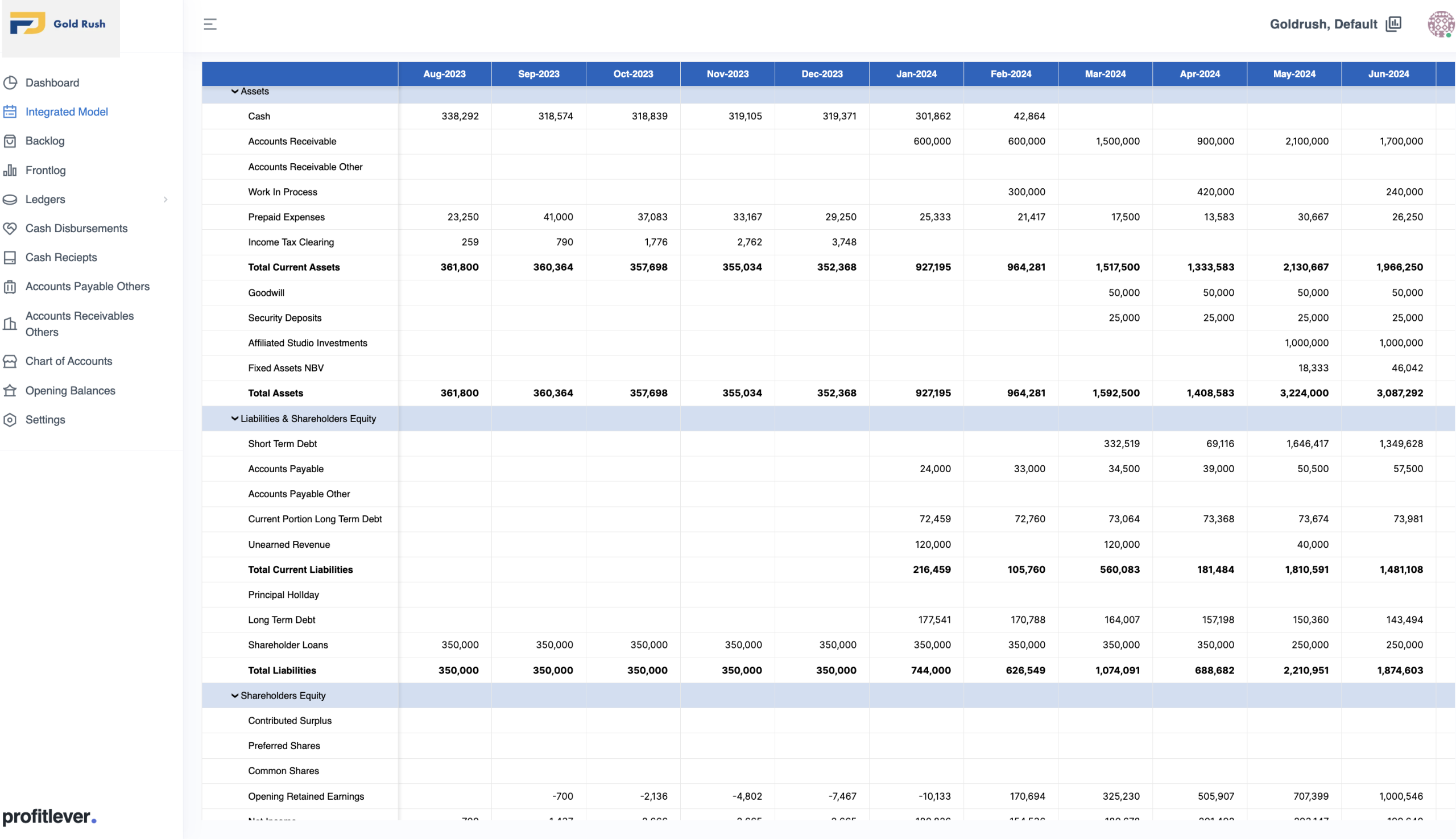
- True 3-statement integrity (P&L ↔ Cash Flow ↔ Balance Sheet)
- Scenario planning & sensitivity analysis (pricing, hiring, churn
- CAC/Payback)
- Variance analysis and rolling forecasts (actuals vs. plan)
- Governance: roles/permissions, assumptions ownership, audit trails
- Board-ready storytelling (dashboards, one-click export packs)
Verticals
- SaaS & subscriptions, professional services, agencies, multi-unit retail
- D2C/manufacturing with inventory, venture-backed scale-ups
Profit Lever’s customers shared the same pain: fragile spreadsheets, slow refresh cycles, and “version-itis” during the most important conversations-board meetings, fundraising, and quarterly planning. Leaders needed a single place where assumptions were owned, traceable, and instantly testable. They wanted true three-statement integrity so changes to pricing, hiring, or payment terms flowed all the way to cash and the balance sheet, not just a pretty P&L. Scenario planning had to be fast enough for live discussion (“What if churn rises 1pt?” “What if we push hires by a quarter?”).
Finance also needed a dependable way to bring in actuals from the source system, run variance analysis, and update the forecast without rebuilding models every month. Beyond math, storytelling mattered: a consistent, board-ready narrative with the metrics investors expect-ARR/MRR, NRR, CAC, LTV, Gross Margin, Burn, Runway-without last-minute spreadsheet surgery.
Finally, governance and trust were critical: role-based access, approvals for key changes, and a clear audit trail so everyone knew which numbers were the numbers.
We built Profit Lever Models as a modular, driver-based modeling layer with a connected 3-statement engine. Teams start with a library of opinionated modules-revenue (new, expansion, churn), COGS, headcount, OPEX, capex, and working capital-then tailor drivers to their business. The Assumptions Hub centralizes inputs with ownership, notes, effective dates, and approvals; every change is logged and diffable.
A real-time Scenario Studio lets users clone base plans, tweak levers (price, volume, ramp, discounts, hire dates, pay terms), and instantly see impact across P&L, cash, and balance sheet. Actuals flow in via CSV/API, mapping to the chart of accounts once, then rolling forward each month. Variance views highlight where plan diverged, while rolling forecasts update with a click. Governance is built-in: roles/permissions define who can edit assumptions or publish plans. Finally, Board Pack templates turn analyses into clean decks-KPIs, waterfalls, cohort views, and commentary-exportable to XLSX/PDF.
Under the hood, caching and background jobs keep large models responsive, and CI/CD ensures safe, incremental releases.
Finance teams moved from “weeks in spreadsheets” to “minutes in scenarios.” Leaders could sit together and explore live what-ifs-pricing changes, hiring shifts, FX sensitivities-and watch the cash and runway impact update in real time. Forecast quality improved because the model enforces discipline: assumptions are owned, documented, and approved; actuals load cleanly; and three-statement math stays consistent.
Board and investor meetings became calmer and more focused; instead of debating formulas and provenance, teams discussed trade-offs and decisions. Sales, marketing, and operations gained a shared truth-contributing inputs in their lane without risking the core model-while finance retained governance and auditability. Operationally, close/planning cycles shortened, variance insights arrived sooner, and “surprises” at quarter-end decreased. Perhaps most importantly, the platform scales with the business: new products, pricing plans, or geographies are added as modules and drivers, not spreadsheet rewrites.
The result is a planning rhythm that’s faster, clearer, and more credible-linking every lever to revenue, margin, and cash so teams can execute with confidence.
Branding, UI/UX Design, Front-end Development, Back-end Development
Client testimonial
Client Testimonial | How bizhues Helped Build ProfitLever’s Financial Intelligence Platform
Founder
Talk to an engineer
Like what you see?
Tell us about the system you need. We reply with questions and a suggested first step.