

Product Website for a Business Simulator · Web Development
ProfitLeverPro
Profit Lever Models sells ProfitLeverPro™, a simulator that shows business owners how one decision affects their operating, investing and finance activities before they commit to it. We built the product website: an interactive model visitors can adjust themselves, a page for each of seven industries, and a demo request that asks for the decision the visitor wants to test.
Built with
- Next.js
- Interactive SVG
- Vercel
Expertise
- Product websites for complex software
- Interactive explainers
- Industry landing pages
- Lead forms that qualify enquiries
- Keyboard and screen reader support
- Responsive layouts
Verticals
- Business planning software
- Financial modelling
- B2B software
ProfitLeverPro is an unfamiliar kind of software. It is not an accounting package or a spreadsheet template, and it is sold to business owners and CEOs who may not have a finance background. The website had to explain the idea quickly: a company has three dimensions (how much of each sale it keeps, how hard its assets work, and how it is funded), and a change in one moves the other two.
It also had to show buyers in different sectors that the simulator applies to them. A contractor weighing a larger contract and a retailer weighing price against volume pull different levers, and each needed to see their own decision described in their own terms.
Every visit should lead to one action: booking a personalised demo. The sales conversation works best when the prospect arrives with a real decision, so the form had to collect that decision without turning into a long questionnaire.
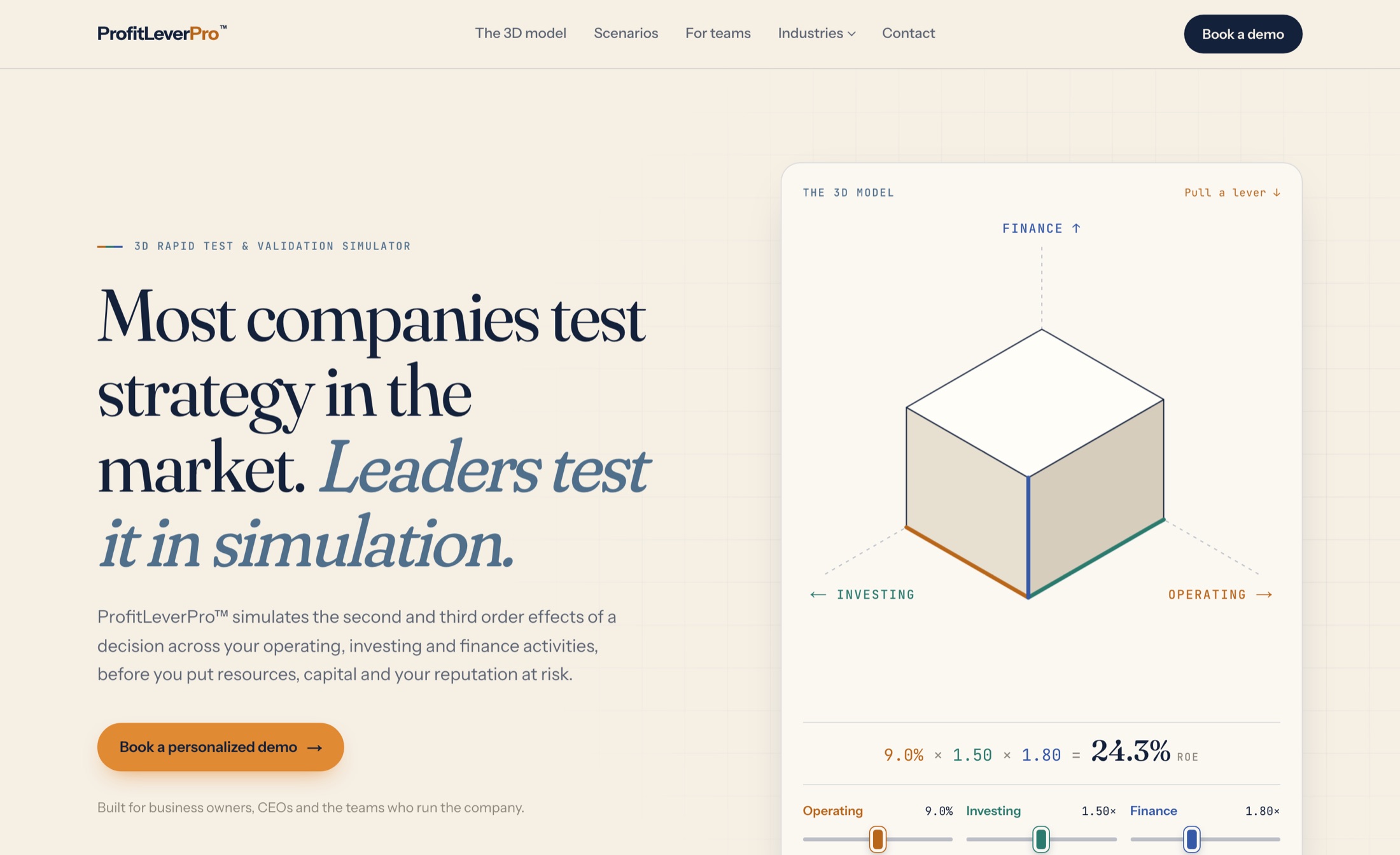
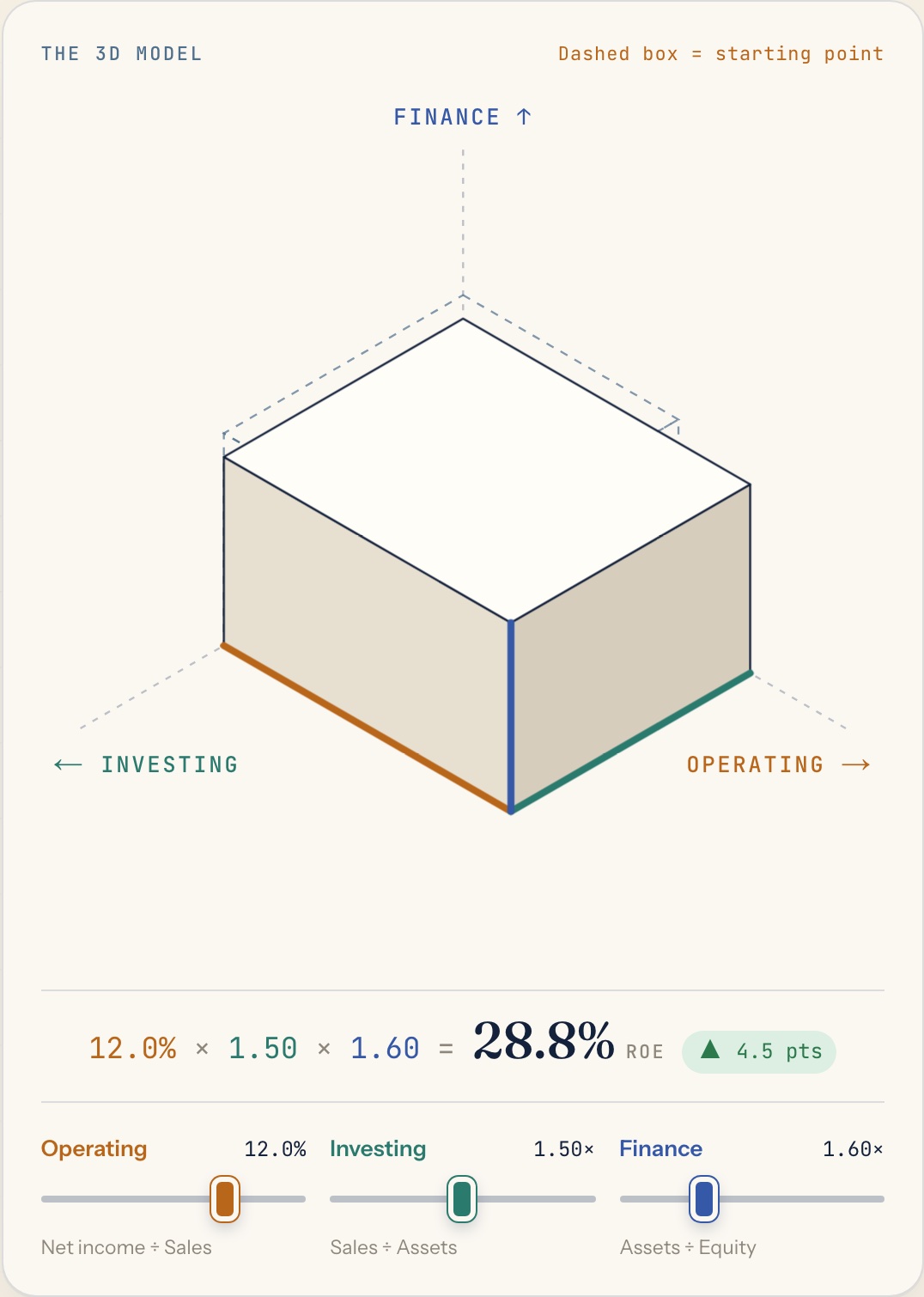
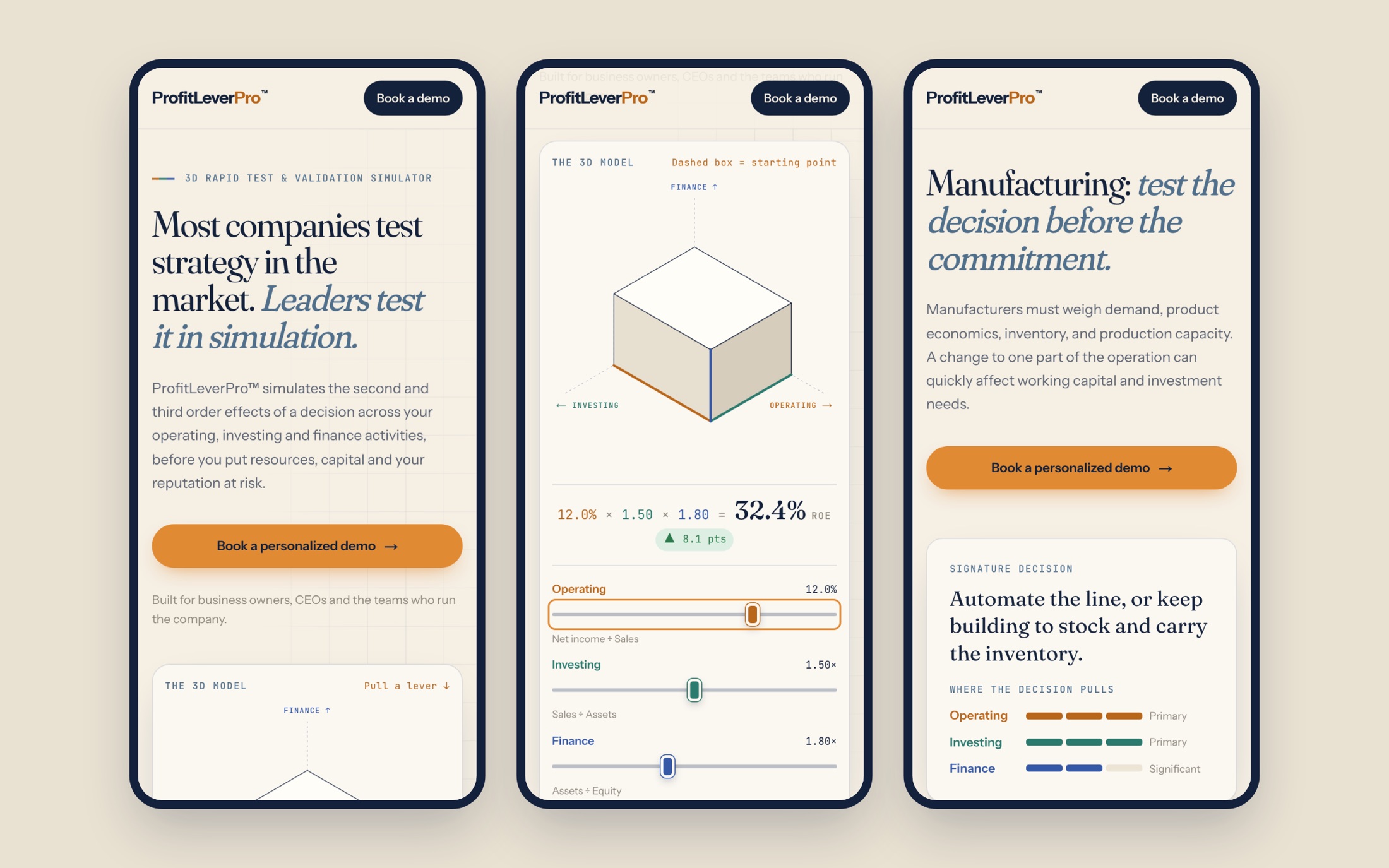
We built the homepage around a model visitors can use, not a description of one. Three sliders set operating margin (net income ÷ sales), asset turnover (sales ÷ assets) and leverage (assets ÷ equity). The cube redraws along each axis, a dashed outline keeps the starting point visible, and return on equity is recalculated with the change shown in points beside it.
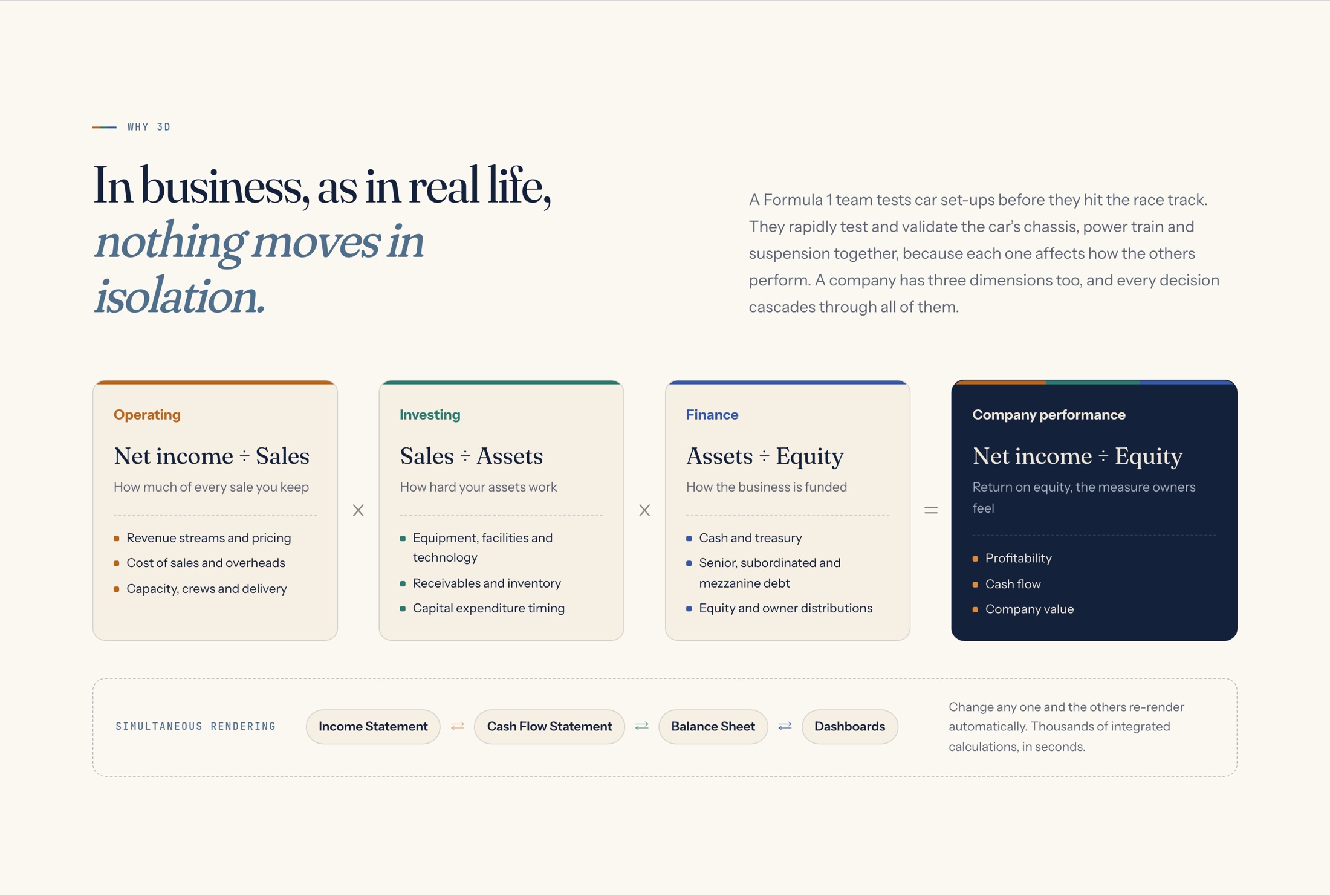
The next section breaks the same formula into four panels, one for each dimension and one for the result, so visitors can see what each lever covers: pricing and overheads under operating, equipment and receivables under investing, debt and equity under finance.
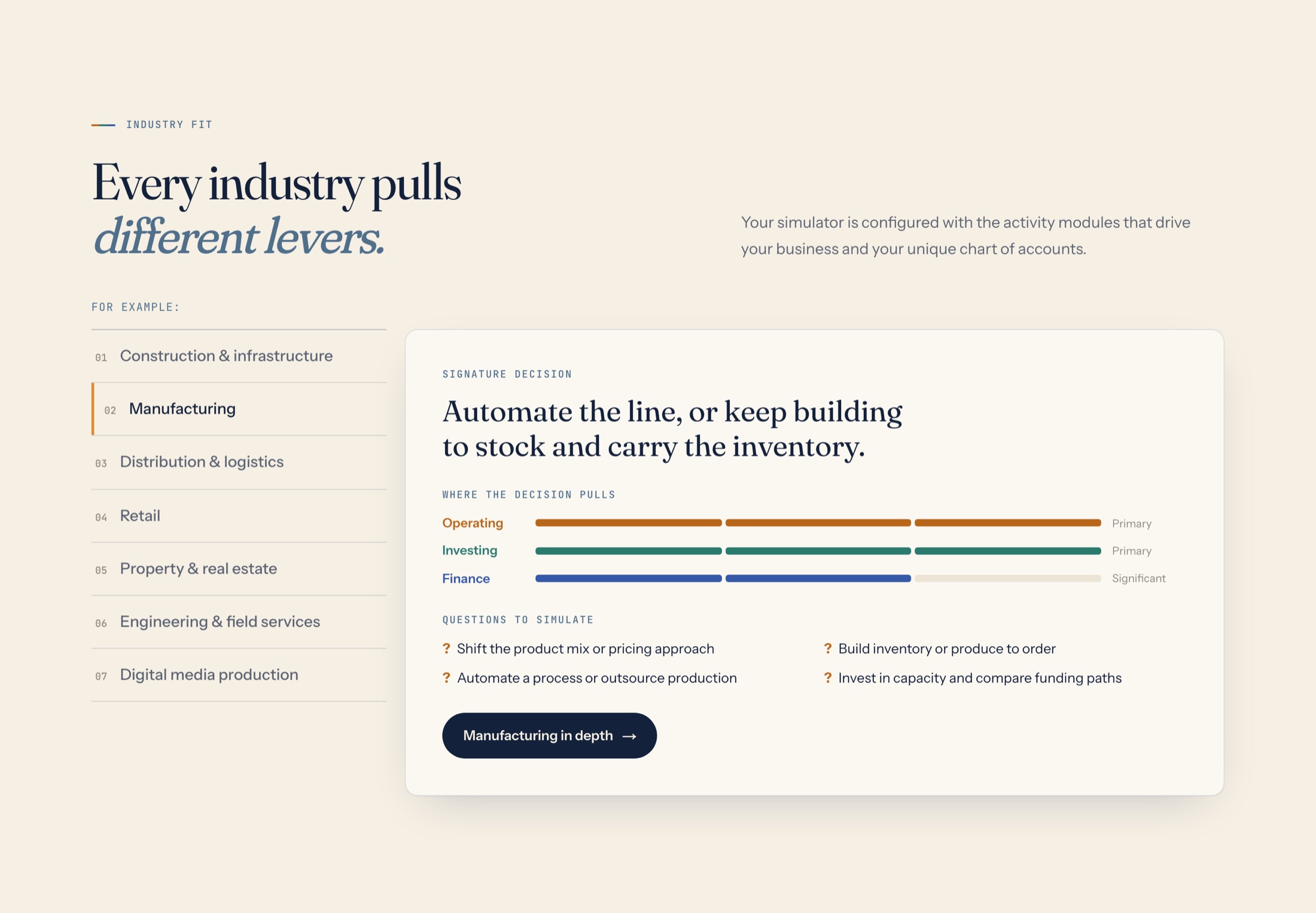
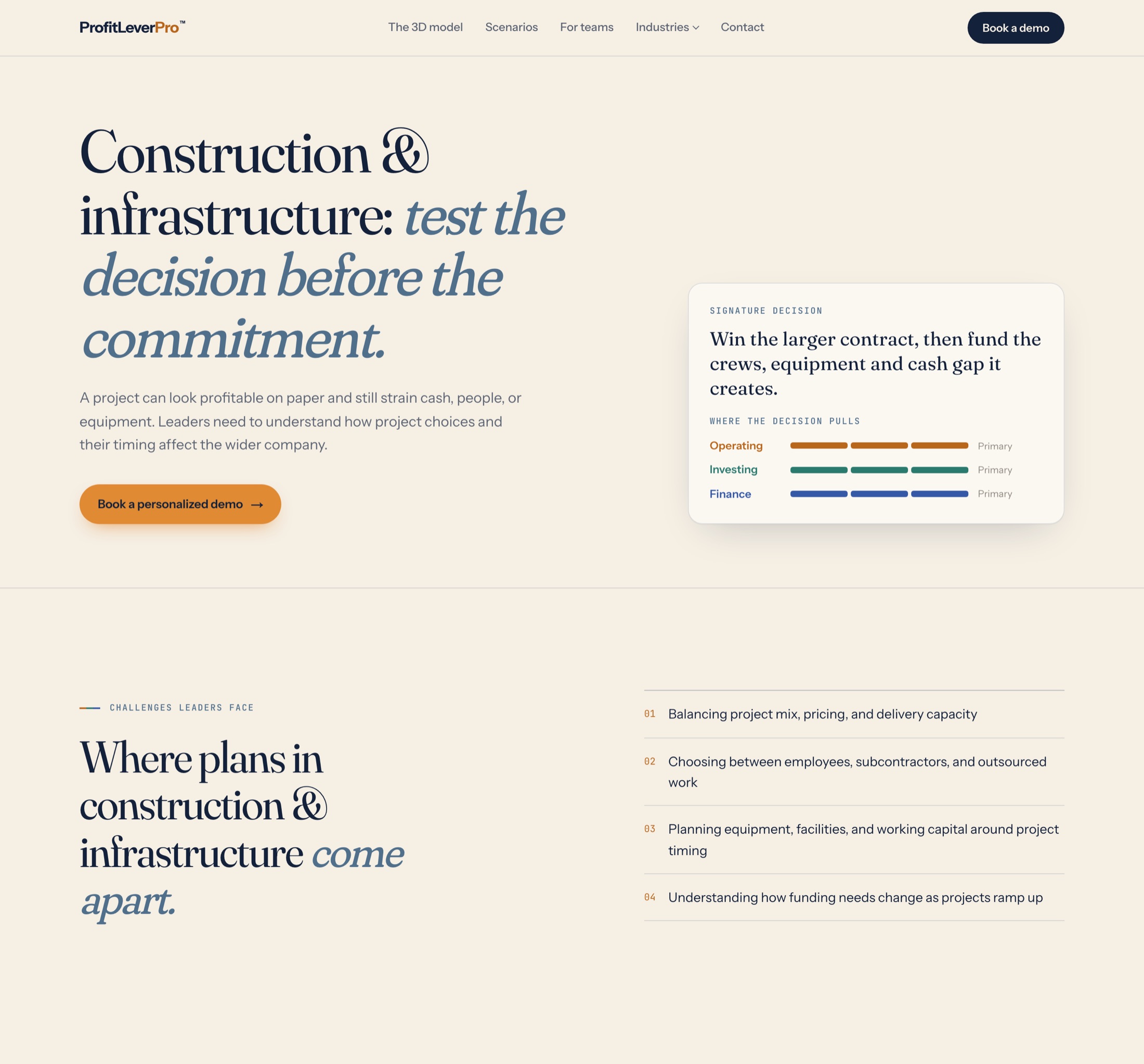
For industry fit, a tabbed explorer gives each of seven sectors a signature decision, bars showing how strongly that decision pulls on each dimension, and the questions a leader in that sector would bring to a demo. Each tab links to a full industry page with the sector's planning problems, a before-and-after comparison and its own demo prompt.
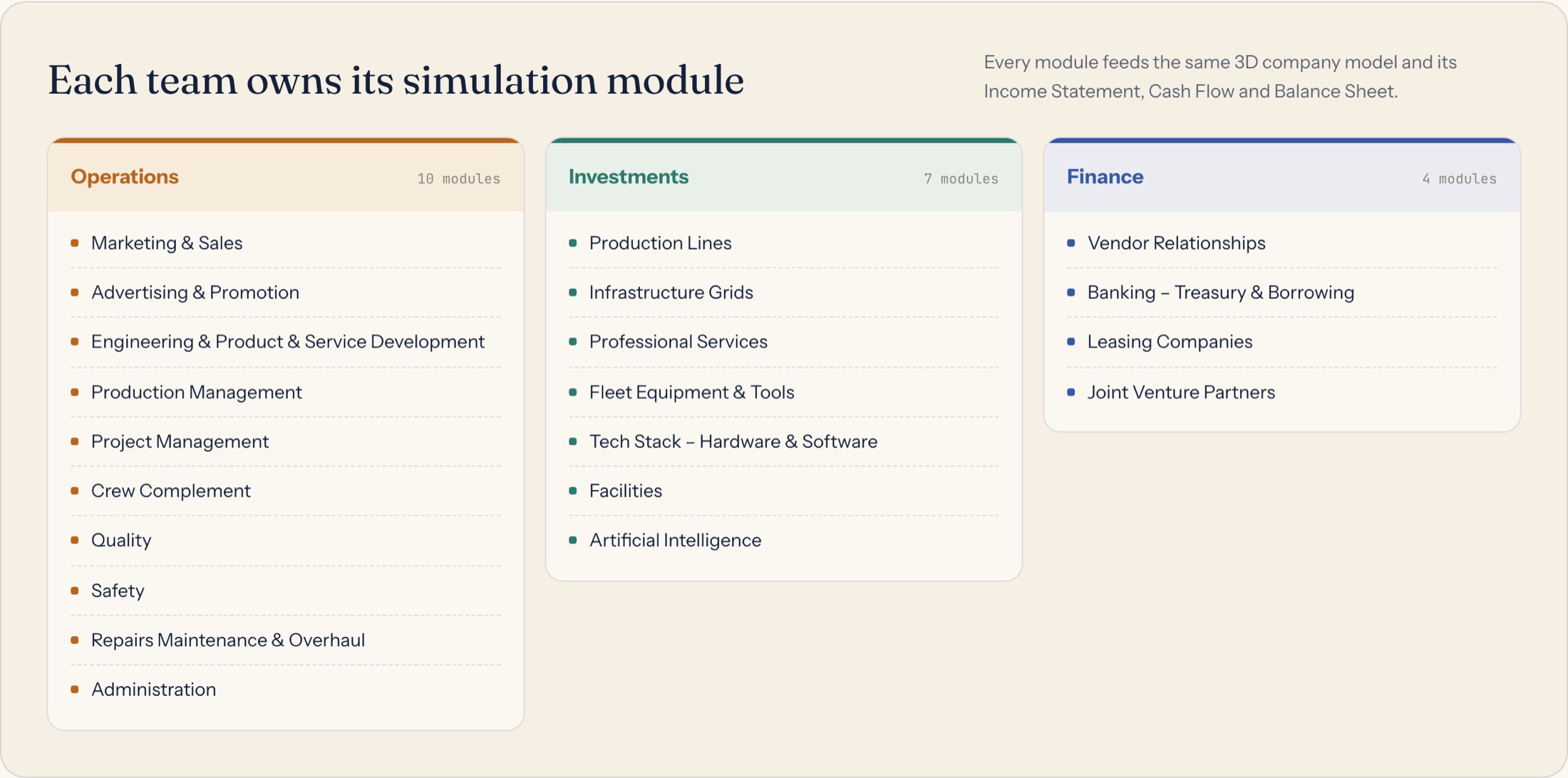
For the teams who would run the simulator, a module map lists every module by dimension, so a head of operations, investment or finance can find the part of the company they would own.
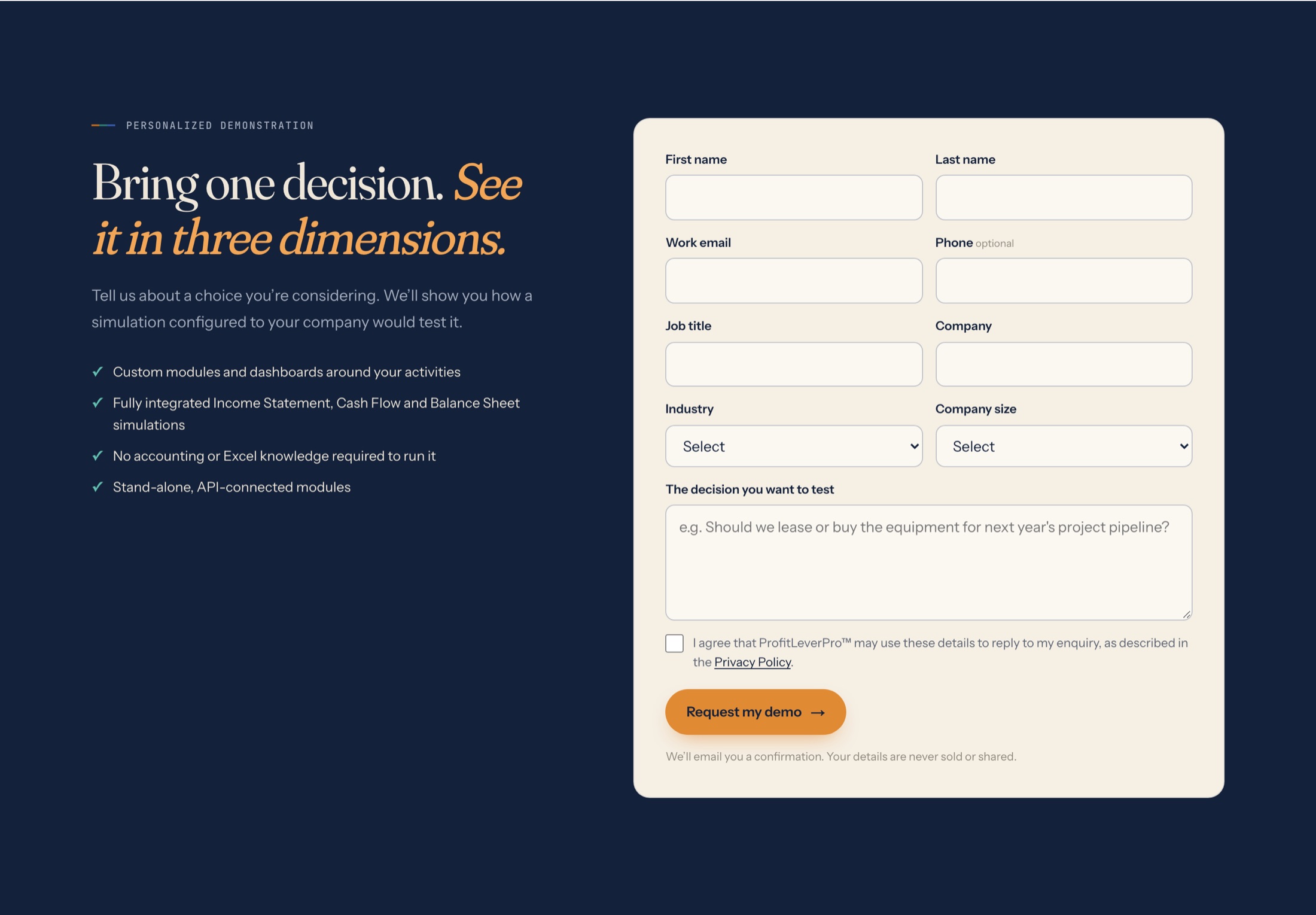
The demo form asks for name, work email, role, company, industry and company size, and one open question: the decision the visitor wants to test. Its placeholder gives an example, "Should we lease or buy the equipment for next year's project pipeline?", so visitors know the level of detail expected. A contact page uses the same form for product questions, partnership enquiries and support.
Every interactive part works from the keyboard. The sliders and tabs are standard, labelled controls that screen readers announce, the model's result is also given as text, and animation switches off when a device asks for reduced motion. On phones the model, the industry pages and the form stack into a single column.
The site is built with Next.js, pre-rendered and served from Vercel. It also includes privacy, cookie, terms, disclaimer and accessibility pages and a sitemap.
Profit Lever Models now has a website where a prospect can try the core idea of the product in a few seconds, see it applied to their own sector, and request a demo with a specific decision attached. Each request arrives with the visitor's industry, company size and role, so the client can prepare a relevant simulation before the first call.
We have also worked with Profit Lever Models on their financial modelling platform. Read that project story.
Talk to an engineer
Like what you see?
Tell us about the system you need. We reply with questions and a suggested first step.